





Civil matters are non-criminal disputes that fall into various categories, for the recovery of money with interest, property and rights including property disputes within family, Property disputes with others, breach of Contract, within family issues like:Legal heirship & Succession, consumer complaints, and torts (Civil wrongs). These are governed by the Code of Civil Procedure, 1908 (CPC), which outlines the procedural framework for filing suits and conducting civil proceedings. A civil court has the authority to hear these cases unless a specific law prohibits it, and the goal is to resolve the dispute through a court order or decree. Civil matters includes: Regular Civil Suit for property claim, Right and money claim, Miscellaneous application like: Heirship and Succession Certificate ,Death declaration, Partnership in property and business, Specific performanace over agreement and Codicils like Letter of Administration, Probate administrative disputes like:MAT, CAT, etc.
know more
Criminal matters are legal
cases involving actions considered offenses against society,
such as Sexual harassment, Rape, theft, Cheating, Kidnapping, assault or murder etc. The government, through a prosecutor, initiates criminal proceedings
against an accused individual to determine guilt or innocence and, if found guilty, to impose a penalty
like a fine or imprisonment. These matters are handled through a legal process that includes
investigation, trial, and sentencing, and are distinct from civil matters, which deal with disputes
between private parties.
Key aspects of criminal matters
Nature of the offense: Criminal matters involve crimes that are harmful to the public and are defined by
criminal law. Examples include murder, theft, assault, fraud or cheating, and drug offences etc.
Role of the government: The state, not the individual victim, prosecutes the case through a
government-appointed prosecutor.
Purpose: The goal is to punish the offender, deter future crime, and protect society.
Legal process: A typical criminal matter involves an investigation by law enforcement, followed by a trial
where a judge or jury decides guilt or innocence.
Outcomes: A guilty verdict can result in penalties such as fines, imprisonment, or, in some cases, the
death penalty.
Distinction from civil law: Criminal cases are initiated by the government to punish offenses, while civil
cases are initiated by private parties to resolve disputes and seek compensation for damages.
Example process (in India)
Crime occurs: An act is committed that is against the law.
Investigation: Police investigate the crime, and evidence is gathered.
Prosecution decision: The evidence is sent to the prosecutor, who decides whether to proceed with the
case.
Arrest or summons: If the case proceeds, a warrant for arrest or a summons is issued.
Trial: A trial takes place in a criminal court where evidence is presented by both the prosecution and the
defense.
Judgment: The court determines guilt or innocence.
Sentencing: If the person is found guilty, a sentence is imposed, which can be a fine, imprisonment, or
both.
Criminal offence also includes private Complaints,which are process by individals against the accused and
complaint directly to the judicial magistarte, who after taking cognizance of the matter direct police
department to investigate and matters prosecute through private practitioners. Such complaints are not
processed through public prosecutors.

"Family matters" refers to
legal issues likeMarriage Conjugal rights, Divorce, with mutual consent,One side Divorce, Child custody ,maintenance, and inheritance, which are governed by various personal and secular laws such as the Hindu Marriage Act and the Special Marriage Act. The concept of family is also evolving socially, moving from
traditional joint systems towards nuclear families and other diverse structures like single-parent and
blended families, a shift influenced by urbanization and education. These legal and social aspects are
addressed by specialized family courts and lawyers who help navigate the complexities of these issues.
Legal framework
Personal laws: India has distinct religious personal laws for different communities, such as the Hindu
Marriage Act for Hindus, Buddhists, Sikhs, and Jains, and the Muslim Personal Law (Shariat) Application
Act for Muslims. The Special Marriage Act applies to interfaith or civil marriages.
Key legislation: Other important laws include the Protection of Women from Domestic Violence Act, 2005,
the Indian Succession Act, 1925, and the Guardians and Wards Act, 1890.
Family Courts: The Family Courts Act, 1984, provides for the establishment of family courts to facilitate
the speedy and amicable settlement of family disputes through conciliation.
Types of cases: Family courts handle a wide range of issues, including marriage and divorce, child custody
and guardianship, maintenance and alimony, adoption, and domestic violence.
Social and cultural evolution.
Changing family structures: Societal shifts, driven by factors like urbanization and education, are
leading to a rise in nuclear families and a decline in traditional joint family systems.
Diverse family forms: The definition of family is expanding to include various structures like
single-parent, blended, and same-sex families.
Impact of technology: Modern communication technologies enable family members to maintain strong ties and
support systems even when living far apart, as seen in the case of transnational migrant families.
Perceived stress: Financial strain is a significant factor associated with mental health for many
individuals in India, highlighting the need for targeted support. Family matters mostly involve dispute
between married couple, like Divorce, Seperation
or conjugal rights. Matters related to Legal Hership,Succession, Death declaration, property distribution within
family members like Husband, Wife and Children.

Cooperative housing society
matters encompass collective management and
maintenance of properties, financial and administrative issues, and member-related disputes, all governed
by state Cooperative Societies Acts and local bylaws. Common concerns include disputes over maintenance charges,property transfer through Cooperative Housing Society formation, property transfersDeemed conveyance, elections, parking, and unauthorized construction, which can be resolved
through a tiered grievance process or the courts.
Management and maintenance.
Collective responsibility: Members share responsibility for managing common areas and facilities like
security, water, and electricity.
Bylaws and regulations: The smooth functioning of a society depends on adherence to its registered bylaws
and rules, which are subject to the state's Cooperative Societies Act.
Disputes: Common issues include maintenance charges, repairs, and renovations, which are often addressed
by the managing committee.
Financial and administrative issues
Financial mismanagement: Inadequate financial planning and control can lead to problems.
Property transfer: Transferring ownership or property rights can be complex, especially when dealing with
issues like outstanding dues or non-members.
Elections: Controversies often arise over the election process, with debates over whether
government-appointed officers or society members should conduct elections.
Unauthorised construction: Building violations and encroachments on common areas are significant problems.
Member-related issues
Membership: Societies may have different types of members, but typically only the first owner has voting
rights.
Grievance resolution: A multi-level mechanism exists for resolving grievances, starting at the society
level and escalating to the registrar if necessary.
Disputes: Matters such as nuisance caused by residents, or property transfer to outsiders, can also be
sources of conflict.
Legal and dispute resolution
Legal framework: Societies are registered under the Cooperative Societies Act, and the Act, rules, and
bylaws form the legal basis for their operations.
Grievance mechanism: A formal process exists for members to raise complaints, beginning with the managing
committee and moving through various levels of the cooperative department.
Court and legal action: For unresolved issues, members can approach cooperative courts or other legal
forums.
Penalties: Societies can impose penalties for violations, such as a fine for encroachment. Matters related
to Society formation, Deemed Conveyance, society and it's member's complaints are resolved through Society
registrar and
Cooperative Court's. Disputes can be against theSociety's working Committee, election, fraud by office
bearer, embezzelement, in-efficient working of committee, unauthorised construction
and nuisance to society member's and alsorecovery of maintenance through it's member's.
Labour law in India is a comprehensive system coveringwages, Working environment, Social security,
and Industrial relations with the four new labour codes (Wages, Industrial Relations,
Social Security, and Occupational Safety, Health and Working Conditions) replacing several older laws. Key
principles include ensuring minimum wages, limiting daily and weekly working hours, mandating breaks,
providing for social security benefits, and regulating dispute resolution and termination procedures. Key
aspects of Indian labour law.
Working hours and leave:
Adult workers are limited to a maximum of 9 hours per day and 48 hours per week.
A break of at least 30 minutes is required after every 5 hours of work.
Overtime must be paid at double the normal rate.
Mandatory weekly holidays are provided, often on Sunday.
Wages and payment:
Laws like the Minimum Wages Act, 1948, set minimum wages.
The Equal Remuneration Act, 1976, ensures equal pay for equal work for both men and women.
Wages must be paid in current currency and on time.
Health and safety:
Laws such as the Factories Act, 1948, ensure occupational safety and health standards.
Social security:
The Code on Social Security, 2020, integrates multiple laws to provide benefits like pensions, medical
insurance, and maternity leave.
Industrial relations:
The Industrial Disputes Act, 1947, governs the settlement of industrial disputes through methods like
conciliation, arbitration, and adjudication. It also outlines procedures for lay-offs and retrenchment.
Termination of employment:
While employers can terminate employment, they must follow proper procedures, provide notice (or pay in
lieu), and avoid unfair labour practices by employer.
Employees can challenge Wrongful termination and seek remedies such as back wages and reinstatement.
Constitutional basis:
Indian constitutional articles provide a framework for labor rights, including equality, freedom to form
unions, and prohibition of forced and child labor.
New labour codes:
The four new codes (Code on Wages, 2019, and the Industrial Relations Code, Social Security Code, and
Occupational Safety, Health and Working Conditions Code, 2020) aim to simplify and consolidate 44 existing
laws.
The Code on Wages and the Code on Social Security introduce a unified definition of wages and expand the
scope of social security benefits across sectors. Any dispute between employer and employee, disputes
related to employment, unlawful termination, payment of wages and
disputes over bonus, srtikes and lockout, are resolved through Industrial and Labour Court.

Consumer courts in India are a three-tier quasi-judicial system designed to resolve disputes between consumer and seller or service providers like builders, Traders etc. This system includes the District, State, and National Commissions, each with specific monetary jurisdiction for handling complaints based on the value of goods/services and compensation claimed. The goal is to provide a speedy and inexpensive method for consumers to get justice for issues like defective products or deficient services. Three-tier system District Consumer Disputes Redressal Commission (District Commission): Handles complaints where the value of goods or services and compensation does not exceed ₹50 lakh. State Consumer Disputes Redressal Commission (State Commission): Hears cases where the value exceeds ₹50 lakh but does not exceed ₹2 crore. National Consumer Disputes Redressal Commission (National Commission): Adjudicates cases where the value of goods or services and compensation is over ₹2 crore. How to file a complaint Eligibility: You must be a consumer who has paid for a product or service to be considered a consumer under the law. Time limit: A complaint must be filed within two years from the date the cause of action arose. Filing a complaint: You can file a complaint online through the e-Jagriti portal or by visiting a consumer commission in person. You can also call the National Consumer Helpline at 1800-11-4000 or 1915. Evidence: You will need to provide evidence such as bills or purchase memos to prove your claim. Legal representation: You can represent yourself or file a complaint through a legal professional. In genuine cases, free legal aid is provided to those who cannot afford an advocate, as stated by the National Consumer Disputes Redressal Commission. Appeals An appeal against an order from the District Commission can be filed with the State Commission within 45 days. An appeal against an order from the State Commission can be filed with the National Commission. An appeal against an order from the National Commission can be filed with the Supreme Court of India within 30 daysDeficiency in service by the service provider may approach Consumaer forum.Consumer Forum to resolve the disputes on services either by the builder to his flat purchasers or by product sales companies to his buyers
know more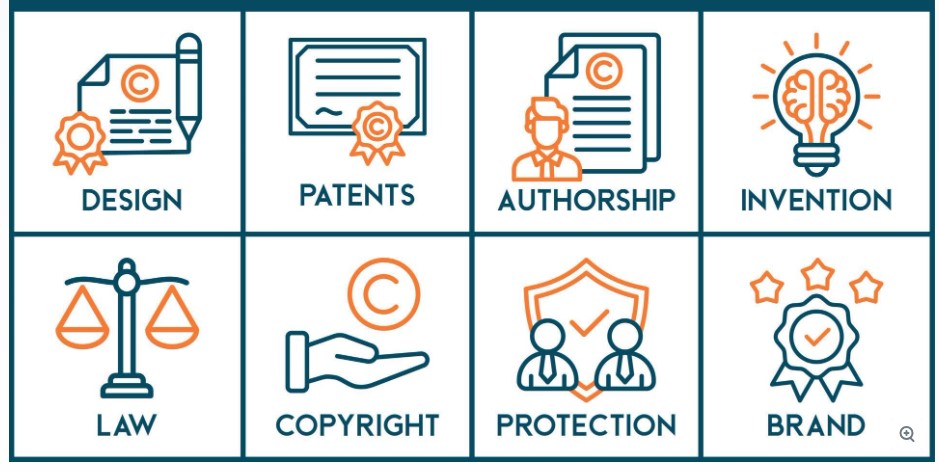
Intellectual property (IP) is a legal concept which refers to creations of the mind for which exclusive rights are recognized. Under intellectual property law, owners are granted certain exclusive rights to a variety of intangible assets, such as musical, literary, and artistic works; discoveries and inventions; and words, phrases, symbols, and designs. Common types of intellectual property rights include copyright, trademarks, patents, industrial design rights, trade dress, and in some jurisdictions trade secrets. India's Intellectual Property Rights (IPR) are governed by several key acts, including the Patents Act, 1970, Trade Marks Act, 1999, Copyright Act, 1957, and Designs Act, 2000. Other important legislation includes the Geographical Indications of Goods (Registration and Protection) Act, 1999, the Protection of Plant Varieties and Farmers' Rights Act, 2001, and the Semiconductor Integrated Circuits Layout-Design Act, 2000. The Information Technology Act, 2000 also has relevant provisions, particularly concerning digital aspects of IPR. Properties which is creation of human mind is known to be as Intellectual. It includes creation like Logo, Trademark, Copyright, and innovation, invention which is unknown to world yet and need to be patent.
know more
The National Company Law Tribunal (NCLT) is a quasi-judicial body in India that adjudicates issues related to companies, including insolvency, winding up, and other corporate matters. Established on June 1, 2016, the NCLT has several benches across India, with the Principal Bench located in New Delhi. Its decisions can be appealed to the National Company Law Appellate Tribunal and then to the Supreme Court of India. Key Functions and Powers The NCLT acts as a specialized court with exclusive jurisdiction over a wide range of corporate matters: Insolvency and Bankruptcy: It serves as the Adjudicating Authority for corporate insolvency resolution processes (CIRP) and liquidation proceedings under the Insolvency and Bankruptcy Code (IBC), 2016. Its role includes admitting insolvency applications, declaring a moratorium, appointing resolution professionals, approving or rejecting resolution plans, and ordering liquidation if necessary. Company Law Matters: It presides over various proceedings under the Companies Act, including: Arbitration, compromise, and arrangements (mergers and amalgamations). Cases of oppression and mismanagement of a company, protecting the rights of minority shareholders and depositors. Rectification of the register of members and addressing grievances related to the transfer of shares. Ordering investigations into a company's affairs and freezing its assets if necessary. Approving the conversion of a public limited company into a private limited company. Winding up and dissolution of companies.
know more
Our other services include property transfer through Sale, Gift deed, Power of Attorney and WILL registration within Mumbai region only. Domicile certificate and e-Gazette services. Consultancy over Income Tax and investment in Govt's tax exempted schemes and Bonds. We also provide consultancy over investments in Stock market and real estate projects.
know more



High Court Original Side matters
The Bombay High Court's Original Side functions as a court of first instance for high-value civil suits, testamentary, admiralty, and company matters arising within Mumbai and its jurisdictional area. It operates separately from the Appellate Side, with specialized rules, often handling complex commercial or testamentary cases directly.
know moreThe Appellate Side of the Bombay High Court handles appeals, revisions, and writ petitions against lower court judgments, covering both civil and criminal matters throughout Maharashtra (and Goa/UTs). It operates at the main bench (Bombay) and branches in Nagpur, Aurangabad, and Kolhapur, handling cases related to district court decisions, property, and constitutional matters.The Bombay High Court Appellate Side Rules, 1960 regulate the hearing of these cases by Division or Single Benches.
Address:
Shop No. 1, Dnyan Muktai,
Plot No. 19, Sector 13,
Kharghar, Navi Mumbai
Maharashtra - 410210
Address
Shop No. 2, Ram Apartment,
Tiranga Chowk, Ganesh Nagar,
Nr. Sangam Cinema
Maharashtra - 440024